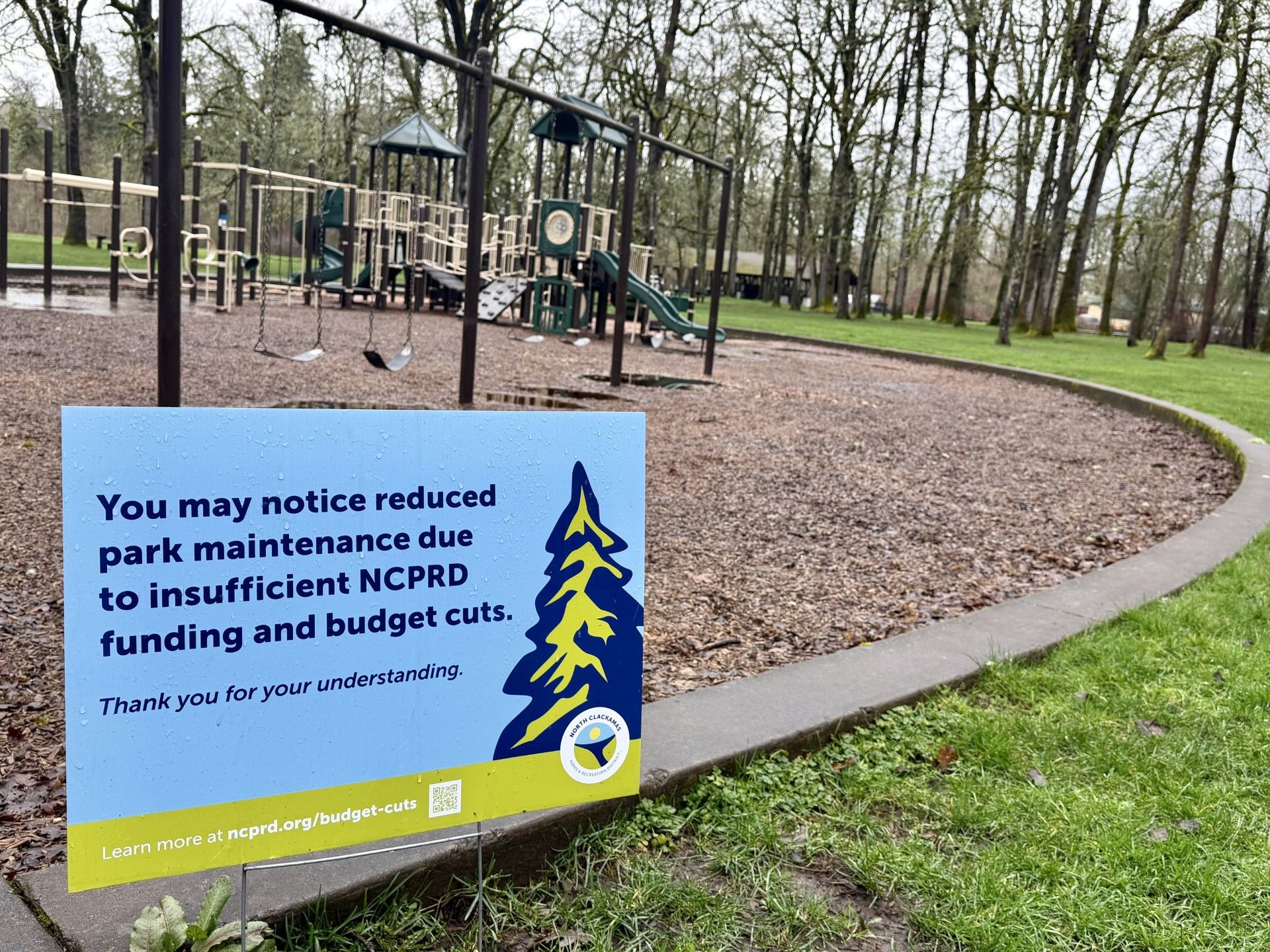
NCPRD Budget Reductions for the 2026-2027 fiscal year.
Date: Jun 15, 2026
What was the required budget reduction for the Fiscal Year 2026-27 Budget?
A $400,000 reduction in operating costs was required to align General Fund expenditures with General Fund revenues and achieve a structurally balanced budget. This reduction was in addition to the $1.3 million reduction implemented in the Fiscal Year 2025–26 budget.
Why are these budget reductions necessary?
The permanent tax rate that funds NCPRD operations has not increased since 1990, even as the cost of operating parks, facilities, and programs has increased significantly with inflation.
Without additional revenue, ongoing budget reductions will be required each year, with a projected fiscal cliff in Fiscal Year 2031–32. A fiscal cliff is the point at which NCPRD would no longer have sufficient funding to meet its financial obligations. Reaching this point would result in significant service reductions, including the elimination of recreation programs and events, reduced or eliminated park maintenance and irrigation, park restroom closures, and community center closures.
How does NCPRD’s funding compare to other park districts?
NCPRD has the lowest permanent tax rate among park districts in Oregon. For comparison (per $1,000 of assessed property value):
- North Clackamas Parks and Recreation District: $0.54
- Bend Park and Recreation District: $1.46
- Chehalem Park and Recreation District: $.91
- Tualatin Hills Park & Recreation District: $1.31
- Willamalane Park and Recreation District: $2.01
This means peer districts receive almost or more than double the funding. Learn more about funding challenges.
How were budget decisions made?
In prioritizing limited general fund resources, NCPRD is allocating revenue to programs that best align with our mission: enriching community vitality and promoting healthy living through connections to nature and play, now and for the future.
What programs and services are affected?
Fiscal Year 2026-27 Budget Reductions:
Elimination of low performing recreation programs
Elimination of events that are duplicated in the region (e.g., Winter Celebration and Fiesta Latina)
Extended annual maintenance shutdown at the Aquatic Park (six weeks instead of four weeks)
Continued hiring freeze for most staff positions
The budget reductions outlined above are cumulative and build upon reductions for Fiscal Year 2025-26.
Fiscal Year 2025-26 Budget Reductions:
Reduced maintenance and irrigation in parks
Elimination of NCPRD funding for the Milwaukie Community Center Transportation Program (service now funded by grants and provided by Impact NW)
Cancellation of the RecMobile recreation program
Elimination of one Concerts in the Park event
Elimination of seven filled staff positions
NCPRD is continuing to work with community partners to identify new revenue sources to financially support services and programs in the future.
How will this affect parks in the District?
- Less frequent mowing of turf
- Reduced irrigation
- Restroom closures at certain parks
What will change at community centers?
Milwaukie Community Center: Some recreation programs with low attendance will be discontinued. The Milwaukie Community Center Foundation will contribute more than $300,000 to maintain the current Meals on Wheels service level and fund a fifth day of operations at the Center. The Transportation Program will continue three days instead of five days each week and is now fully funded through grants and operated by a community partner, Impact NW.
Concord Community Center: Some sports and recreation programs with low attendance will be discontinued.
North Clackamas Aquatic Park: The extended shutdown will impact regular aquatic fitness and recreation participants across all programs, including Lap Swim, Aquatic Exercise, Parent Preschool Swim, and Big Surf.
If NCPRD is facing funding shortfalls, how can it still purchase properties or move forward with capital projects?
Operational funds come from NCPRD’s permanent tax rate of $0.54 per $1,000 of assessed value, which has not increased since 1990. These funds are used to support recreation programs, staffing, and ongoing maintenance of parks and facilities. Property acquisition and capital project funds come from sources such as System Development Charges (SDCs), grants, and other one-time funding sources. These funds are restricted and cannot be used for operations.
Also, NCPRD sold two properties in 2024 (Wichita Center and Clackamas Elementary School) and committed to reinvesting these funds to provide service in park deficient areas. Having said this, property acquisition and new park development may need to be postponed in the future as new obligations require new operational funding for maintenance.
What is NCPRD doing to address these challenges?
NCPRD is working with the community and The Trust for Public Land to evaluate potential funding solutions. Learn more about our work to address these challenges and achieve long-term financial stability.
Thank you for your support
NCPRD deeply appreciates your continued support as we navigate these challenges and work toward a more sustainable and stable financial future for NCPRD.


