Funding Our Future
NCPRD is facing a real challenge: A growing funding gap that will require cuts to our programs and operations each year if nothing changes. We are working with our community to find a solution.
Who We Are
The North Clackamas Parks and Recreation District (NCPRD) is a public agency formed by voters in 1990 to provide parks, natural areas, recreation facilities, and programs to 106,000 residents across 27 square miles in unincorporated Clackamas County and the City of Milwaukie.
We manage 38 parks, trails, and natural areas; operate the North Clackamas Aquatic Park (Oregon's largest wave pool), the Concord Community Center, and the Milwaukie Community Center. Through the Milwaukie Community Center, we also provide Meals on Wheels, and other older adult services to thousands of community members each year.
NCPRD is governed by a Board of Directors (the Clackamas County Commissioners) and advised by an elected District Advisory Committee of community volunteers.
A stable organization — with a growing financial challenge
NCPRD takes the stewardship of assets and finances seriously. In recent years, the district has:
Secured approximately $4.8 million in grant funding over two years to support capital projects
Mobilized nearly 73,000 volunteer hours in FY 2024–25
Maintained a 96% customer satisfaction rate
Opened the new Concord Park and Community Center
Cultivated private fundraising partnerships including the Milwaukie Community Center Foundation and the Heart of the Community Campaign for the Concord Community Center
At the same time, a funding gap has been widening for years. NCPRD's permanent tax rate — the primary source of operating revenue — has been set at $0.54 per $1,000 of assessed value since the district was formed in 1990. Unlike many other parks districts in Oregon, the rate has never been increased or supplemented with other voter-approved funding.
Tax revenue grows with the property tax base, currently at roughly 3% per year. But operational costs — staffing, maintenance, utilities, supplies — have grown rapidly. Electricity costs alone have increased by an average of 9% each year over the past 5 years. That gap compounds over time.
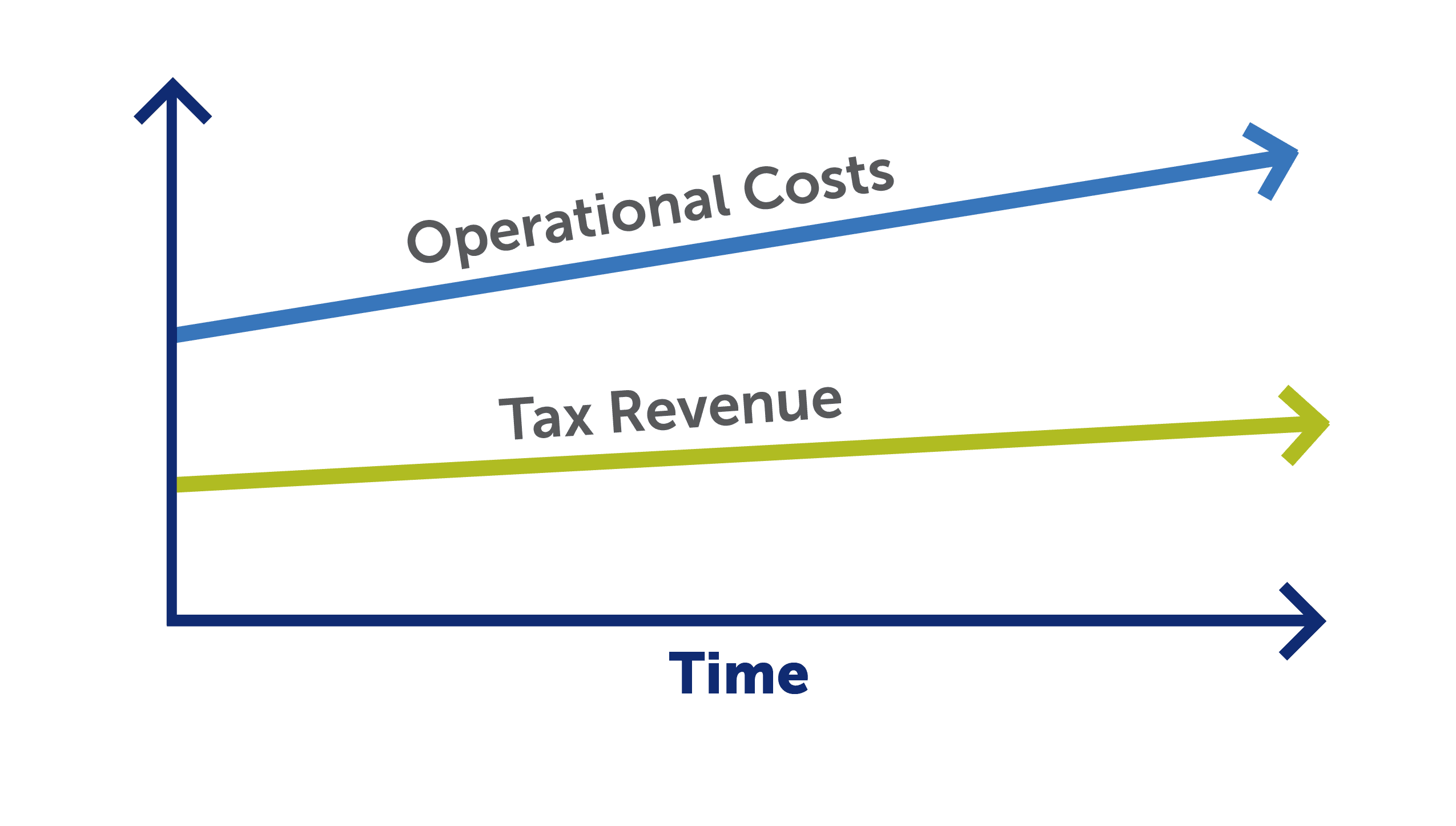
As a result, the district has faced a series of difficult budget reductions:
FY 2025–26: Approximately $1.3 million in budget reductions
FY 2026–27: An additional ~$400,000 reduction planned
Without additional revenue, ongoing budget reductions will continue each year — with a projected fiscal cliff in FY 2031–32
What is a fiscal cliff? It's the point at which NCPRD would no longer be able to meet its financial obligations — meaning it could no longer operate parks, facilities, and programs at any meaningful level.
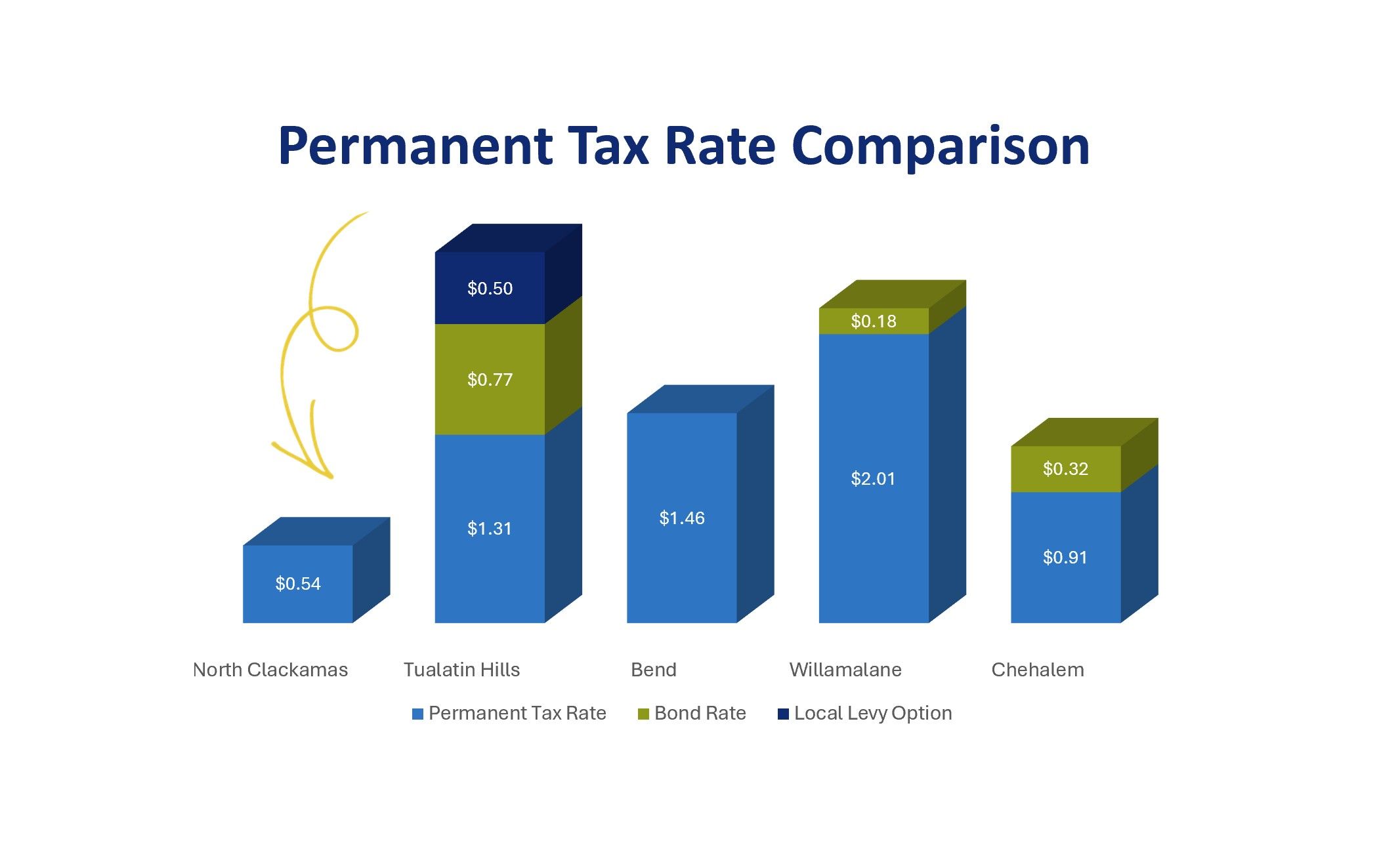
More People. More Parks. Same 1990 Funding.
NCPRD's tax rate is the lowest of any parks and recreation district in Oregon. Every comparable district in the state has pursued additional voter-approved funding over the years. NCPRD has relied entirely on its 1990 permanent rate.
We're working toward a long-term solution
In early 2026, the NCPRD Board of Directors authorized a partnership with the Trust for Public Land to evaluate funding options and engage the community in identifying a path forward.
The Trust for Public Land is a national nonprofit that has been working with communities throughout Oregon and the country for more than 30 years to develop and pass parks funding measures. Their work with districts like ours is designed to ensure that any solution reflects what the community actually supports.
The process: three phases
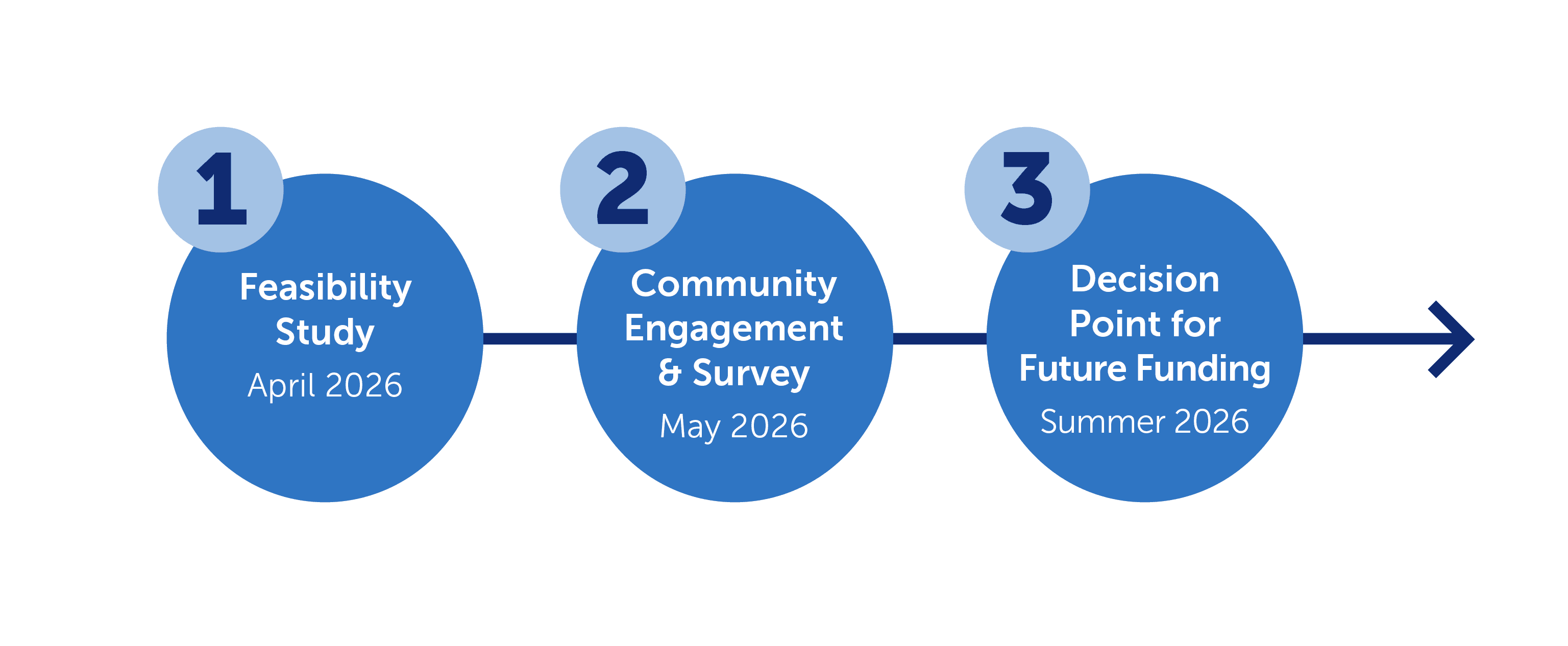
Phase 1: Feasibility Study (April 2026)
The feasibility study reviews available funding mechanisms (such as a levy or a permanent tax rate increase), analyzes different funding level scenarios, and provides options for the NCPRD Board to consider.
Phase 2: Community Engagement & Survey (May 2026)
A survey of district residents identifies community preferences for additional funding, and NCPRD staff will engage with community groups about options for the district’s financial sustainability. This input will help gauge priorities and support for different funding approaches.
Phase 3: Decision Point for Future Funding (Summer 2026)
The NCPRD Board of Directors considers the feasibility study, community input, and survey findings. A decision is made about whether and how to proceed with a funding measure.
Why is this happening now?
Several factors have aligned to make this the right moment to act:
The extent of NCPRD’s funding gap is now clearly defined. The district has a detailed financial picture.
NCPRD just completed its first 20-year System Plan since 2004, built through extensive community engagement. This gives the district a clear map of community needs and priorities that additional resources could address.
Community members are asking for a solution and expressing support for addressing the district's long-term funding needs.
The NCPRD Board is responsive to the community.
Together, these conditions create an opportunity to act thoughtfully and transparently, in partnership with the community we serve.
Frequently Asked Questions
Supporting Documents

Stay informed and help shape what comes next
Your voice is central to this process. Here's how to stay connected:
Check this page for updates as the feasibility study and survey process move forward.
Attend an NCPRD Board of Directors meeting (quarterly) or a District Advisory Committee Meeting (every other month). See public meeting opportunities.
Follow NCPRD on Facebook and Instagram for news and announcements.
Sign up for NCPRDs email newsletter for updates.
Download the one-pager and share it with neighbors, community groups, and friends who care about parks.
Contact NCPRD with questions: fundingourfuture@ncprd.org